
Blog
What is a Customer Loyalty Programme?
Learn more


Your brand is how people feel about your business or products. It is what they say about you when you are not in the room. And in a crowded European market, where consumers have more choices than ever and loyalty is harder to earn, building a brand that resonates consistently and measurably is one of the most important investments a marketing team can make.
A brand strategy is a long-term plan that defines who you are as a brand and how you present yourself to customers and prospects. It is not just a name and a logo. It is your unique identity, personality and the promise you make to everyone who encounters your business.
When executed well, a brand strategy plays a powerful role in achieving business goals, from meeting sales targets and growing revenue to building the kind of customer loyalty that compounds over time. Specifically, effective brand building helps you:
The intangible elements of a brand strategy get you noticed and create emotional relationships built on resonance and trust. But in 2026, the most effective brand strategies across EMEA are not built on intuition alone. They are built on data.
Traditional brand building relies heavily on creative instinct and experience. Sometimes that instinct is right, but with marketing budgets under sustained pressure across Europe, few CMOs can afford to build a brand strategy on guesswork.
A brand strategy built on a foundation of customer data and behavioural insight is more likely to resonate with the audiences you are trying to reach, and more likely to produce a measurable return on investment. The key shift is from asking "what do we think customers want?" to asking "what does the data tell us customers actually respond to?"
This does not diminish the role of creativity. Data makes creative decisions stronger by grounding them in evidence, ensuring your brand voice, messaging and visual identity are built around real customer insight rather than internal assumptions.
The strongest brand strategies in EMEA right now combine creative clarity with data-driven precision. Brands that can do both consistently are pulling ahead of those that treat them as separate workstreams.
The following steps build on each other to create a comprehensive brand strategy grounded in customer insight. Work through them in sequence and you will have a clear framework for every marketing decision that follows.
One of the most common tensions in EMEA marketing teams is the debate between brand investment and performance marketing. Budget holders want to see returns, and performance campaigns offer metrics that brand activity traditionally cannot. The result is a gradual shift of budget toward the bottom of the funnel, with brand-building activity deprioritised or cut entirely.
The problem is that performance-only marketing draws down on existing brand awareness without replenishing it. Conversion campaigns work because the brand has already done the work of making people aware and creating preference. Remove the brand investment and, over time, the performance campaigns become less effective too.
Photo printing brand Cheerz faced this challenge directly. Operating in a competitive consumer category, the brand needed to prove that investing in upper-funnel brand activity would drive measurable commercial outcomes, not just awareness metrics that were difficult to connect to revenue.
Working with Epsilon, Cheerz expanded beyond its existing performance activity into open-web video, using high-impact large-format ads targeted at high-potential audience segments including new parents. Crucially, the campaign was designed to measure the commercial impact of brand exposure directly, comparing results between audiences who received both brand-building and retention messaging against those who received retention activity alone.
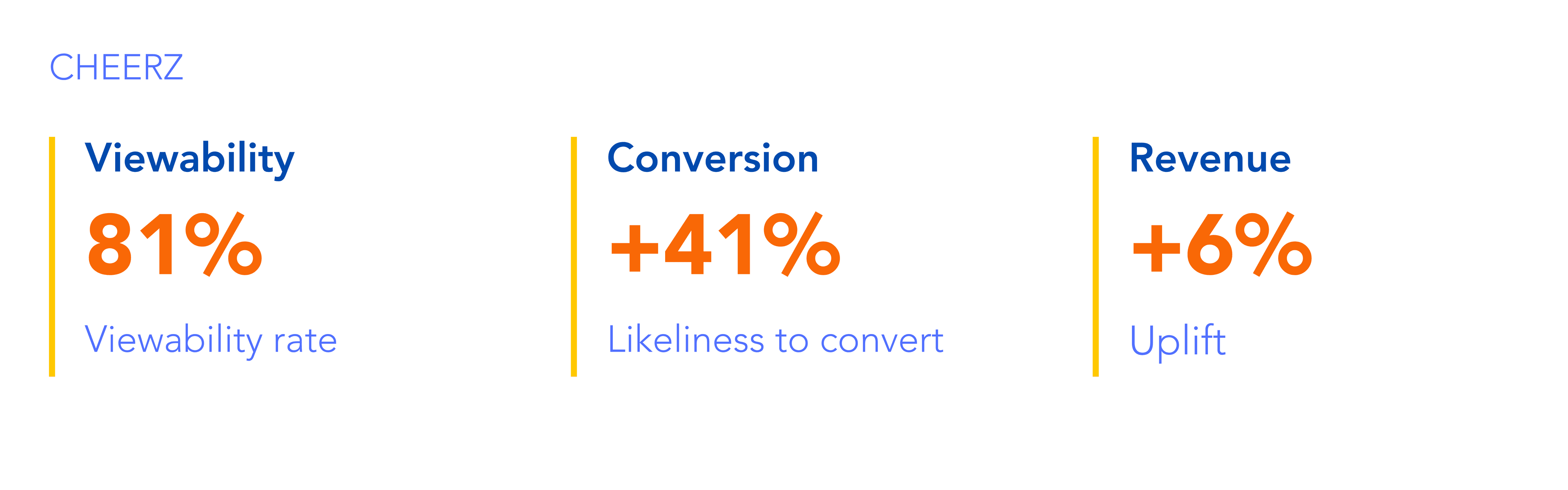
The results made the case clearly. Audiences exposed to the full brand and retention combination were 41% more likely to convert than those who received retention messaging only. The brand-building activity was not just generating awareness; it was directly lifting the conversion rate of the performance campaigns running alongside it.
Defining a brand strategy is only half the work. The other half is activating it consistently across every channel and touchpoint your customers encounter. In practice, this is where many EMEA brands struggle. Teams operate in silos.
Agency partners work from different briefs. Channels run independently with different messaging. The brand that customers experience is fragmented, and fragmentation undermines the trust that brand consistency is designed to build.
Consistent, omnichannel brand activation requires three things working together:
Identity resolution: Identity resolution ties lots of fragmented identifiers together around one real individual. It ensures the right person receives the right message across devices and channels, keeping personalisation consistent and avoiding the fragmented experiences.
Customer data: Paired with strong identity, customer data helps build a full view of customer needs, preferences and past behaviour making it possible to to personalise at scale without losing brand consistency.
AI-driven optimisation: AI tests and refines every element of brand communications, from message and imagery to calls to action, so each touchpoint is informed by what has worked before and what is working now.
A brand strategy is not a document you produce once and file away. It should evolve as your products, market and customers change. Building in regular measurement and review cycles is what separates brands that adapt and grow from those that stagnate.
Beyond Net Promoter Score, which remains a common but limited measure of brand health, EMEA marketers should consider:
Brand strategy and performance marketing are not competing priorities. As the Cheerz example shows, brand investment directly improves the efficiency of performance campaigns. The brands measuring both together are the ones making the most informed budget decisions.
Brand strategy looks different across European markets. Consumer expectations, cultural nuance, language and media habits vary significantly between the UK, France, Germany and beyond. A brand strategy developed for one market rarely translates intact to another, and the brands that perform consistently across EMEA are those that localise their activation while maintaining a coherent strategic core.
What holds across all markets is the underlying principle: brand strategy without data is guesswork, and data without a brand strategy is noise. The combination of creative clarity, deep customer insight and the technology to activate both consistently is what builds brands that grow sustainably in competitive European markets.
Epsilon works with leading European brands to develop and activate brand strategies grounded in first-party data, identity resolution and AI-powered optimisation across every channel.
Get in touch via the Contact Us link below.

