
Blog
What is data-driven marketing, and how do you use it?
Learn more


Online video advertising has moved well beyond a supporting tactic. For UK and EMEA brands, it is now one of the highest-impact channels available, combining the reach and emotional power of broadcast with the targeting precision and measurability of digital. This guide covers what OLV advertising is, why it matters and how to build a video advertising strategy that drives real, measurable returns.
Online video advertising (OLV) refers to short- or long-form video ads placed before, during or after video content on websites and apps, typically running at 6, 15, 30 or 60 seconds. Ads can also appear in-feed, in-article or as standalone outstream placements across the open web.
OLV sits at a useful intersection in the marketing mix. It can carry brand-building creative at scale while simultaneously pushing audiences toward conversion through precise targeting. That dual function is what makes it increasingly central to how UK and EMEA marketers plan their media spend.
Find out about Epsilon’s brand-building, performance oriented creative services.
Digital video consumption in the UK continues to grow year on year, driven by streaming, on-demand viewing and the shift to mobile. Consumers now spend an average of two and a half hours per day watching digital video (eMarketer, 2025), and that figure is still climbing. For brands, this is not just a channel with large reach — it is a channel where audiences are actively engaged and receptive.
The case for investing in online video advertising has never been stronger, but the reasons go beyond reach alone. OLV is particularly well suited to the challenges facing UK and EMEA marketers right now:
1. Precision audience targeting
Reaching real people rather than devices requires deterministic data: physical addresses, email and purchase history. This creates persistent, non-cookie-dependent audience connections that remain accurate as privacy requirements tighten.
2. Compelling creative
Creative is the heartbeat of every OLV campaign. Ads must work across multiple formats and lengths, be optimised for mobile-first viewing, communicate a clear value proposition quickly and maintain brand consistency across every touchpoint.
3. Strategic placement and distribution
Optimising delivery across in-stream and outstream inventory in real time ensures campaigns reach the right audience across the open web when and where they are most receptive, rather than serving impressions at low-value moments.
One of the persistent challenges for UK and EMEA marketing teams is justifying upper-funnel video investment to budget holders who want to see direct attribution to revenue.
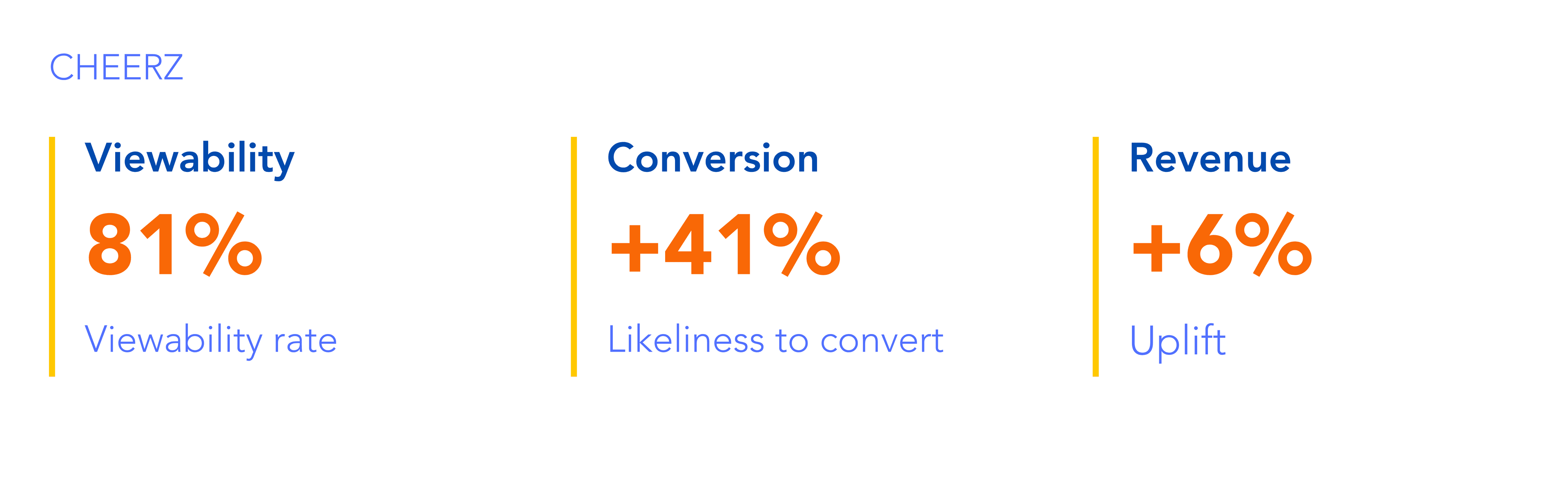
Cheerz, a photo printing brand operating across European markets, faced this challenge directly. The brand had an established performance marketing programme but needed to demonstrate that expanding into upper-funnel video would generate measurable commercial returns rather than simply adding to a reach figure.
Working with Epsilon, Cheerz launched a high-impact open-web video campaign using large-format OLV ads targeted at high-potential audience segments, including new parents. The campaign was structured specifically to isolate the contribution of video exposure to downstream conversion: results were compared between audiences who received both brand video and retention messaging against those who received retention activity alone.
The outcome was unambiguous. Audiences exposed to the full video and retention combination were 41% more likely to convert than those targeted with retention messaging only.
Getting strong returns from online video advertising comes down to a handful of best practices that apply consistently across UK and EMEA markets.
The brands achieving the strongest OLV performance are those using their own customer data to drive targeting rather than relying on third-party audience segments. Segmenting by purchase behaviour, recency and lifetime value produces audience models that are both more accurate and more durable as privacy requirements tighten across Europe.
Identity resolution connects a single customer across their devices, browsers and environments, including Safari and other non-cookie contexts that standard targeting misses entirely. For UK brands, this is particularly relevant given the size of the Safari-using audience and the proportion of digital video consumed on iOS devices.
OLV works best when it is not siloed from the rest of the media plan. Connecting video activity to display retargeting, CTV and email creates a coherent customer journey and allows you to measure the full path to purchase rather than attributing conversion solely to the last touchpoint.
Viewability and completion rates are useful hygiene metrics but they do not tell you whether OLV is driving business outcomes. Set up measurement that connects video exposure to downstream conversion, whether that is an online purchase, an in-store visit or a CRM sign-up, so budget decisions are based on commercial impact rather than proxy metrics.
Dynamic creative optimisation (DCO) uses real-time performance data to test and refine creative elements automatically, from messaging and imagery to calls to action. For OLV campaigns running across multiple audience segments, DCO significantly reduces the manual effort required to keep creative relevant and improves performance over the campaign lifecycle.
Online video advertising is not a channel that rewards a set-and-forget approach. The brands achieving the strongest results in the UK and EMEA are those treating OLV as a dynamic, data-driven discipline: continuously testing creative, refining audience segments, connecting video activity to broader funnel measurement and evolving their approach as the channel and the regulatory environment change.
The foundation for all of this is knowing your customer. First-party data, identity resolution and the ability to measure outcomes at the transaction level rather than the impression level are what separate OLV programmes that drive genuine business growth from those that generate reach figures without commercial impact.
Epsilon helps UK and EMEA brands reach real people across online video, connected TV and the open web, using privacy-compliant first-party data, identity resolution and AI-powered optimisation to drive measurable returns.

