Blog
Behavioural segmentation: The complete guide for ecommerce marketers
Learn more


CTV has errupted, more apps, more inventory, more ways to reach audiences on the biggest screen in the home. But for marketers, that growth has come with a trade-off: less control over who you reach, how often you reach them and how you prove impact across a fragmented streaming landscape.
That was the theme of our session at New Video Frontiers in London, hosted by VideoWeek: if streaming has turned into “chaos”, the winners won’t be the brands that buy more streams, they’ll be the brands that connect them, using identity and measurement to turn impressions into outcomes.
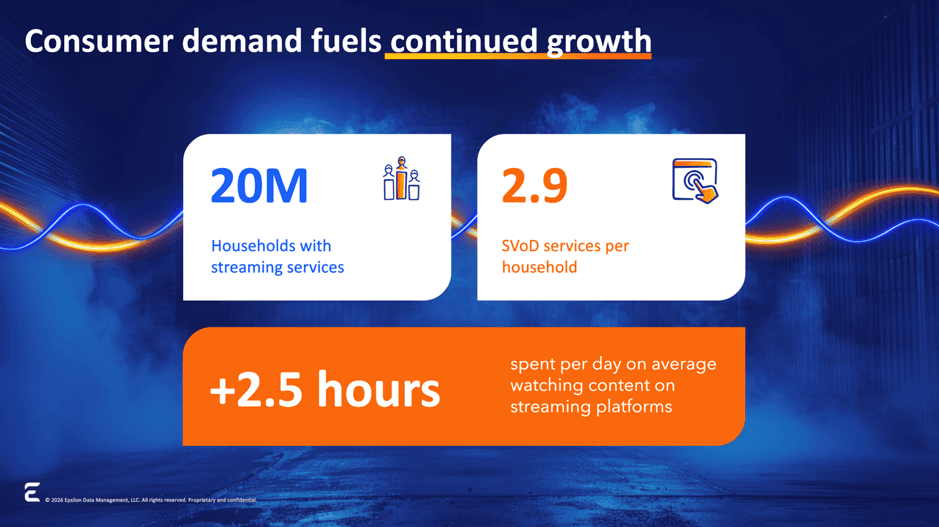
In the UK, streaming is now mainstream: BARB reports 20M households with streaming services, with an average of 2.9 SVoD services per household and 2.5+ hours per day spent watching streaming platforms. At the same time, Comscore data shows a 43% year-on-year increase in hours watched on free, ad-supported streaming, meaning more inventory and (often) lower CPMs, but not automatically better reach, frequency, or results.
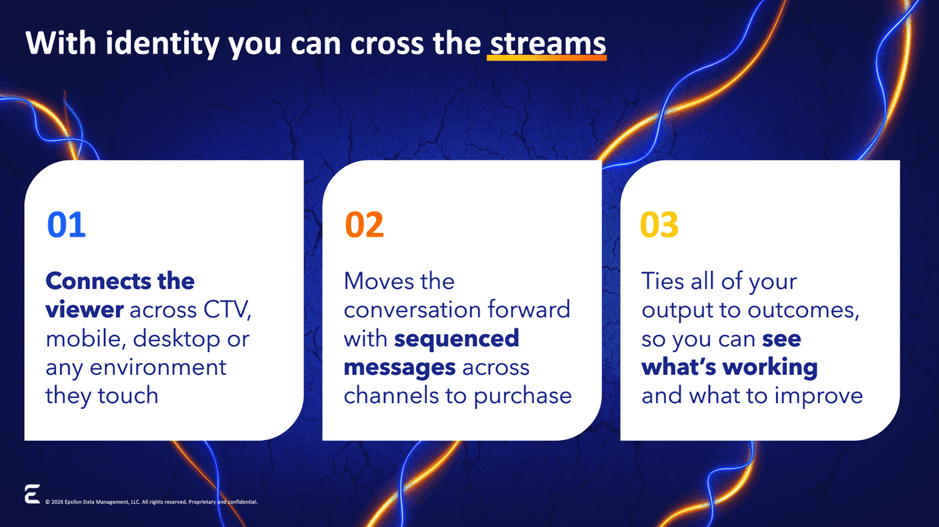
Real customer journeys aren’t linear. People move fluidly between CTV, online video, display, audio and in-store moments, often in the same day. That’s why CTV works best when it’s connected to an identity layer that helps you recognise the same person (or household) across environments. When you can connect exposure to outcomes, you can sequence messages, cap frequency intelligently, reduce duplication, and optimise spend based on what actually drives action, not just what was delivered.
If we took one thing away from New Video Frontiers, it was this: control comes from capabilities, not CPMs. In practice, that means evaluating your CTV approach against five essentials:
To make this easier, we’ve turned these key themes into a practical CTV Buyer’s Guide to help you select partners and build a CTV approach that reaches real people, manages frequency and measures what matters.
If you attended New Video Frontiers and want to compare notes, or you’re rethinking how CTV fits into your performance mix, we’d love to hear what challenges you’re seeing most often in planning, frequency and measurement. Contact us through the button below.