
Research
The push and pull of personalization
Learn more

Brands are spending a good chunk of their budgets and manpower on social ads—but are they really getting the most value out of them? We don't think so.
Audiences today are diversifying their digital interactions; yes they are scrolling on social media, but they're also browsing on platforms across the open web and engaging with content in multiple formats. When you limit your ads to social platforms alone, you're no longer aligned with how consumers are actually spending their time online—plus, you're missing the opportunity to extend the shelf life of your social ads.
So what if social creative wasn’t a channel-specific tactic but a scalable, cross-channel asset?
In this blog, we'll explore how extending social-inspired creative to the open web can help brands unlock incremental reach, unify their messaging strategy across digital channels and meet people across the full decision journey.
There’s no question that social advertising is effective.
Social platforms are built around native formats that let brands tailor content specifically to each app while tapping into trends and current events in real time. In-app commerce features also help reduce friction, making it easier than ever for consumers to move through the purchase funnel without ever leaving the app. For these reasons, many marketers treat social platforms as the end destination for social creative.
But it shouldn't end there.
Consumers today spend ~66% of their time on the open web as opposed to walled gardens. Social media platforms are often considered walled gardens because they are powerful but closed ecosystems that only provide advertisers with the data, inventory and measurement capabilities available within each platform. Marketers that invest solely in social platforms are missing out on a huge number of valuable consumers that are simply browsing elsewhere—plus, they're missing out on key insights that walled gardens don't want to share.
The customer journey is also fragmented, and social media is only one stop along the way. Your best consumers are also:
It's is important to keep in mind that people don’t live exclusively inside feeds—social and scrolling is one moment in a much larger journey, not the journey itself.
So what happens once a campaign ends? Oftentimes that creative gets retired, budgets remain tied up in the social platform and your reach bottoms out, leading to:
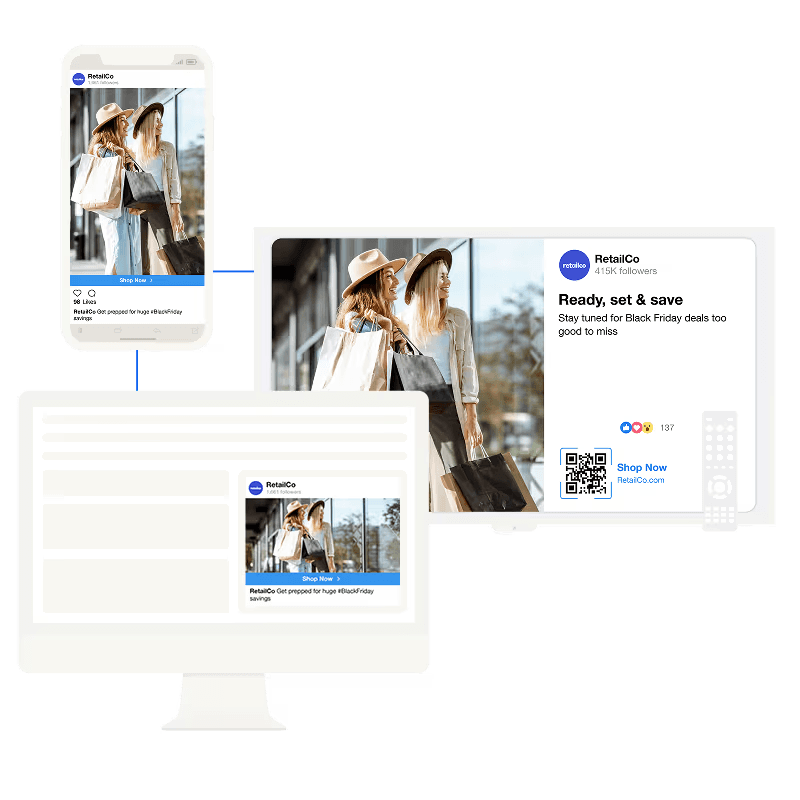
To avoid this, savvy marketers are extending their social reach to the open web by repurposing their social creative for programmatic channels. This strategy keeps what makes social effective while pushing it into environments where people already are, like display, OLV and CTV.
This can unlock several key benefits for marketers, such as:
This is where Epsilon Digital comes in. By taking existing social creative —everything from video to influencer-style content—and extending it across the open web, Epsilon helps brands reach people they may not encounter on social platforms alone. By pairing the speed and authenticity of social with the reach and intelligence of programmatic advertising, we help brands show up in more of the moments that actually influence decisions.
With Epsilon Digital's suite of unique social-inspired solutions, brands can:
These social solutions are amplified by Epsilon Digital's broader capabilities that enable brands to:
Epsilon Digital is also the only solution with identity rooted in real people and predictive AI that ranks each person in real-time, so you can be sure that you’re reaching the best people.
It’s not about replacing social, it’s about making it work harder.
A popular soda brand worked with Epsilon Digital to transform their existing social content into programmatic ads, extending the reach of their social campaigns to online video channels on the open web. This enabled them to connect with their target audiences across the internet, which drove more views, engagement and a successful product launch.
Social is incredibly important for many brands, and it’s taking up more and more budget—but it’s not sufficient on its own.
The brands that win will stop thinking in platforms and start thinking in people and moments. Where are your customers actually browsing? Are you reaching a person, rather than an account?
Want to learn more about how brands are already putting their social strategy to work across the open web? Click here.


