
Blog
Data clean room vs. data warehouse: What's the difference and why you need both
Learn more


No matter who you are—or what you want to purchase—personalization is a baseline expectation of the customer experience.
Streaming devices recommend the best shows, audio platforms suggest the latest music and grocery apps surface relevant coupons based on what you've previously shown interest in. Every day, consumers encounter personalization as a routine part of daily life.
According to Epsilon Pulse research, 80% of loyalty program participants like it when brands personalize their communications with them based on their program status and interactions. Yet most brands still struggle to offer their customers tailored experiences that matter to them.
Though they invest heavily—adopting advanced technologies, collecting more customer data and launching sophisticated campaigns—personalization in marketing comes across as excessively targeted and general.
Rather than delivering what people want, loyalty programs often fall short, stopping at surface-level tactics: a product recommendation or reminder email. This type of outreach might temporarily improve engagement, but they are no longer enough to create lasting loyalty.
Customer loyalty personalization starts with a deeper understanding of your customers preferences, insight into their behavior and additional customer context from online and offline activity. Brands that use this information to fuel their loyalty marketing initiatives can create interactions that feel timely, valuable and consistent—strengthening trust and encouraging customers to return.
In this blog, we’ll explore why many personalization strategies fall short, the layers that make personalization meaningful and practical steps for getting started with a solid data and technology foundation.
Personalization in marketing strengthens customer relationships.
Our customer loyalty research also revealed that 74% of respondents stated they were more loyal to a brand when they have a positive experience with the loyalty program, while 76% of consumers surveyed in our personalization report said they view brands negatively when inaccurate information about them is reflected in the brand’s marketing.
These insights reinforce the idea that personalization isn’t just a preference—it actually encourages loyal behavior. When customers receive relevant recommendations, offers and communications, they are more likely to have a positive experience, trust the brand and continue buying.
Brands that personalize digital experiences, strike a meaningful chord by showing customers that their unique needs and preferences matter. In this way, personalization creates a continuous feedback loop that shapes loyal behavior.
Essentially, as each experience resonates more deeply with the customer's preferences and expectations, their real-time responses inform the next interaction—creating a continuous cycle of increasingly effective personalization. This cycle helps marketers respond to what their customers like and dislike, increasing customer satisfaction, engagement and retention.
Ultimately, each personalized interaction strengthens customer loyalty while generating insights that make future experiences even more relevant.
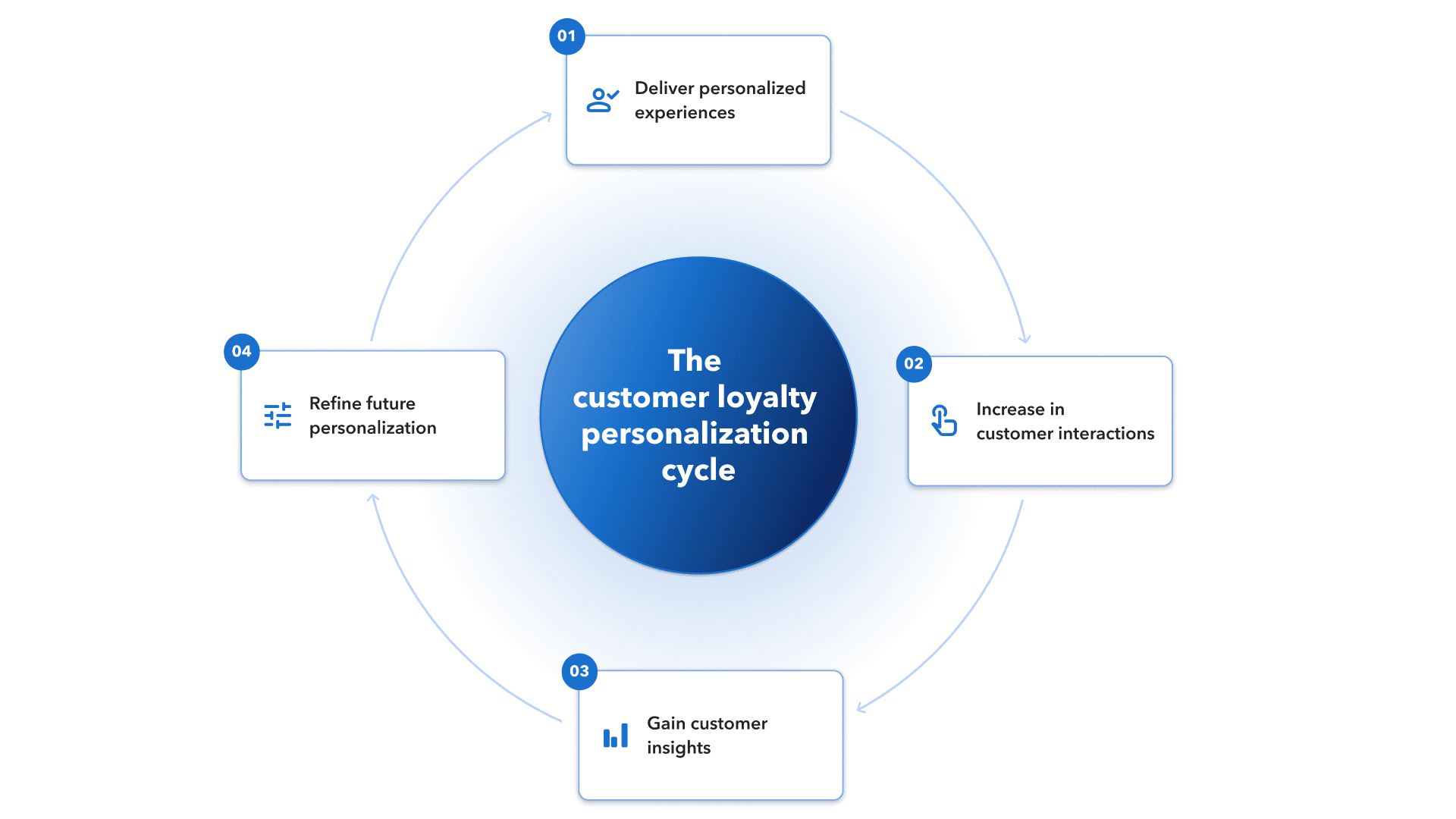
Figure 1. Personalization and loyalty create a continuous feedback loop. Personalized experiences increase customer interactions, generate customer insights and inform future personalization—strengthening customer relationships.
Your dashboard might give the impression that personalization is working for you. However, engagement metrics can look effective while failing to offer real value or personalizing customer experiences in a meaningful way.
While increased clicks, conversions and engagement rates reflect visible brand outcomes, they don’t show the deeper disconnect between measurable activity and authentic consumer-brand connection. Without a customer-centric approach to personalization, the benefits of personalization are lost.
According to Deloitte, only 60% of consumers are satisfied with current personalization in loyalty programs. When customer-centricity is placed in the background of the customer journey, personalization is reduced to statically triggered recommendations, promotional offers and automated responses.
This results in irrelevant messages, poorly timed communications and interactions that force customers to feel as though they need to restart their journey with your brand with each exchange. Without personalized experiences, experience debt builds over time, eroding trust in your brand.
When done right, omnichannel loyalty programs leverage personalization toreflect the customer’s current interests, buying stage and intent and allows brands to connect insights in real-time across touchpoints.Ultimately, personalization goes beyond surface-level customization, building on each interaction—bridging the gap between transactional interactions and how to truly nurture customer loyalty.
Imagine having dinner at your favorite restaurant, and before you look at a menu, they suggest your usual. They also let you know that, as a top-tier member, you’ll receive a free dessert. Then, they offer you a new menu item that’s based on something you’ve enjoyed before.
That's the power of personalization in omnichannel loyalty programs. Personalizing customer journeys allows marketers to recognize your customers, respond with real-time context and deliver value at every interaction.
At the foundation, brands “see who customers are” across channels through identification. By adding relevance, they can tailor content, offers and recommendations to match customer interests. The next layer—recognition—builds on relevancy by remembering customer preferences and past interactions, while anticipation uses insights to recommend next-best offers and suggest complementary products before customer needs are expressed.
Without the right foundation, brands remain transactional, with identification and relevance driving their marketing efforts. To truly be effective, personalization also needs to build understanding through the value exchange created by recognizing customer preferences and anticipating their future needs.
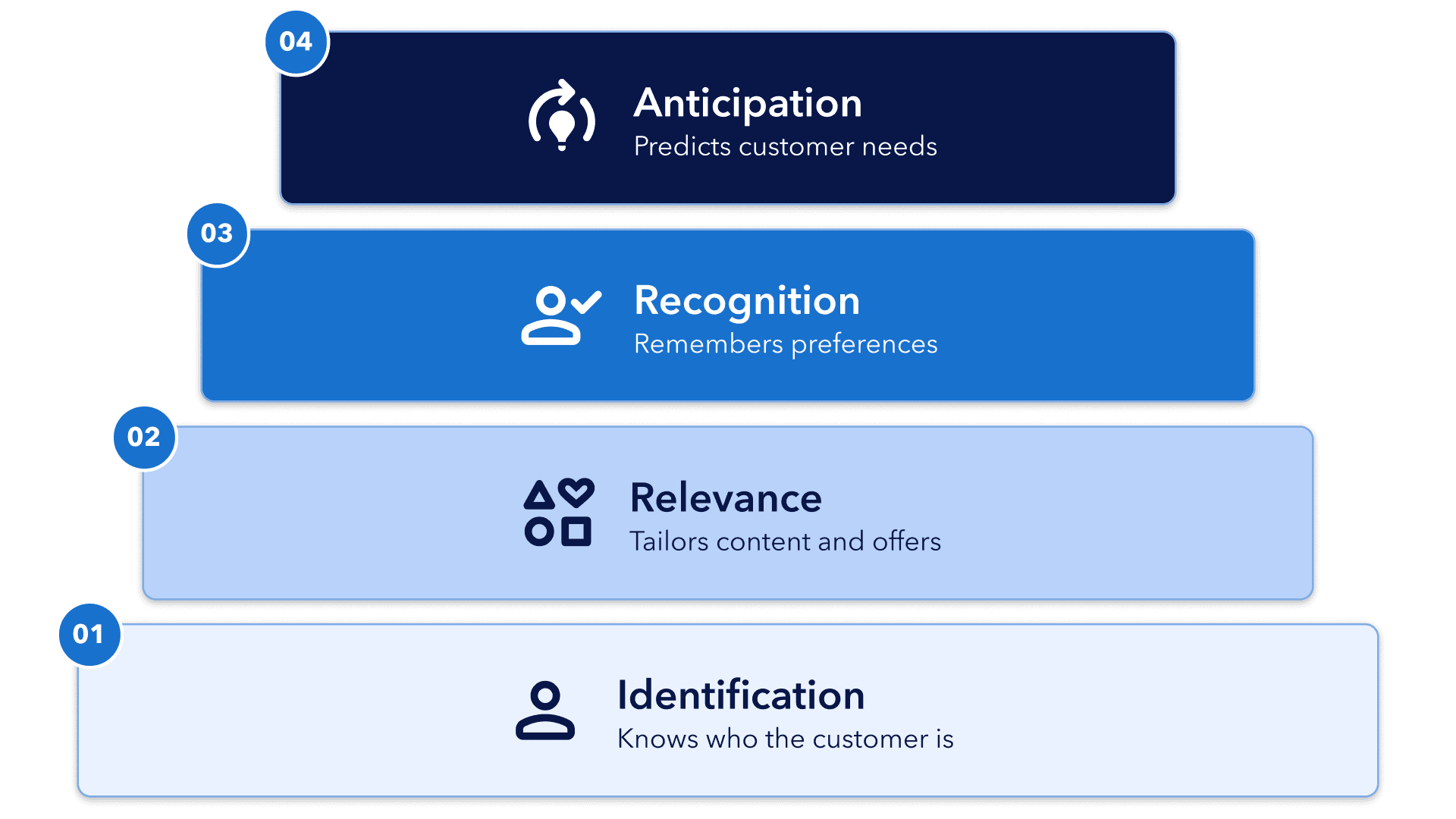
Figure 2. Personalization evolves from identifying customers to anticipating their needs. The progression moves from knowing who a customer is and tailoring content and offers to recognizing preferences and ultimately anticipating customer needs.
When brands move beyond surface-level personalization tactics, they can attract loyalty across generations—transforming disconnected customer interactions into experiences that keep customers coming back.
Epsilon works with Dunkin’ to create seamless customer journeys, stronger trust, and higher engagement for customers known for frequently switching between digital and in-person touchpoints. With a complete view of each customer, they leverage data to maintain a POS integration that connects 9,000+ locations to Dunkin’s loyalty engine for real-time access to rewards with flexible creative—sending 1:1 messages in loyalty statements, customized push notifications and agile mail and in-app content that resonates.
Learn how Dunkin’ unifies consumer-brand communications across channels.
Tractor Supply Company, a leading U.S. rural lifestyle retailer, leveraged quantitative customer data with qualitative feedback to identify potential gaps in the customer experience. As a result, they adjusted their tier and rewards thresholds to improve customer satisfaction by offering top-tier status to military service members, while increasing repeat purchases and long-term loyalty. By using customer behavior and preference data to anticipate future needs, they’ve ensured that their Neighbor's Club loyalty program continuously meets evolving customer expectations—delivering curated experiences in the moments that matter.
To see this approach in practice, explore the Tractor Supply Company case study.
Instead of targeting their communications based on transactions, Walgreens harnessed customer data, with the aim of providing more personal interactions and forging deeper relationships that lead to better outcomes. Patients and customers received 1:1 level notifications, reminders and content, based on real-time data. myWalgreens leveraged Epsilon’s loyalty technology to provide valuable, meaningful experiences that felt more connected, improving engagement and strengthening each customers relationship to the brand.
See how Walgreens used personalization to improve customer experiences.
Each of these brands have one thing in common: they put customer understanding at the focal point of personalized experiences to achieve better outcomes. Having rich customer insights allowed each organization to strengthen their relationships with their customers by delivering meaningful personalization.
This type of deeper customer understanding starts with a strong foundation of data and identity.
Every authentic connection a brand makes with someone begins with knowing who the customer is. This can only happen when disparate interactions are connected to the same customer.
Brands that maintain a clear view of the customer, as they evolve over time, are better equipped to personalize media across channels and create customized experiences that people value. With a strong data foundation, first-party data gets cleansed and consolidated, providing accurate, accessible and precise insights that make every consumer-brand interaction an opportunity to learn more about the customer.
When customer data is enhanced with identity resolution, it fills in the gaps and removes the friction that weakens customer relationships. Identity resolution connects disparate data sources and devices, allowing brands to see each individual customer on a 1:1 level, enabling experiences that feel continuous rather than fragmented.
Quality data and identity are the foundation of effective personalization. An industry-recognized loyalty marketing platform—with data and identity management built-in—can help you personalize communications based on recognition, relevance and trust.
An advanced dashboard can tell you what customers are doing, and effective measurement capabilities reveal why they are doing it. The right customer loyalty platform brings both tools together—enabling brands to understand the broader story beyond engagement:
Measurement is critical to personalization in marketing. Data-driven measurement will help your brand refine personalized customer experiences, improve relevance and deepen customer understanding.
To create meaningful, personalized experiences that lead to long-lasting loyalty, program managers need a focused approach. By partnering with a loyalty provider that offers ongoing strategic support, brands can implement a 90-day roadmap that builds on their capabilities, proves impact and creates momentum for long-term growth.
This roadmap creates a practical path that brands need for personalization that learns, adapts and scales.
To effectively personalize the customer journey across touchpoints, our personalization guide can help you understand key strategies and capabilities that drive meaningful customer experiences. Along with our latest consumer loyalty research, Epsilon Loyalty provides the support you need to take the next step and bring these strategies to life.
Personalization drives customer loyalty by making customers feel recognized rather than targeted. Relevant experiences reduce friction while meaningful recognition builds emotional connections that strengthen trust over time. When brands consistently anticipate customer needs and deliver value in the moments that matter most, they create positive experiences that keep customers coming back and deepen long-term loyalty.
A loyalty program provides the structure through memberships, points, rewards or tiered benefits, while personalization makes those experiences feel relevant and earned. Without personalization, loyalty programs often compete primarily on discounts or incentives. Personalization can also exist without a formal loyalty program as a broader marketing strategy. Together, however, personalization and loyalty programs reinforce one another to create stronger customer relationships and lasting engagement.
Effective loyalty personalization relies on first-party data connected to a unified customer profile across every channel. Purchase history, browsing behavior, stated preferences and consent records all help create consistent, relevant experiences. Without a unified view of the customer, personalization becomes fragmented, making it difficult to maintain recognition as customers move between digital and physical touchpoints.
Yes. Research from Deloitte shows that many consumers are willing to share personal data when they receive more relevant, personalized experiences in return. This creates an implicit value exchange: customers provide information, and brands deliver recognition, convenience and meaningful recommendations. To maintain trust, brands must make that value clear while handling customer data transparently and responsibly.
Measuring personalization goes beyond engagement metrics. Brands should also track behavioral outcomes like repeat purchase rate, purchase frequency, customer lifetime value and average order value. Comparing personalized experiences against control groups remains the most reliable way to determine whether personalization is driving meaningful improvements in customer loyalty.
One of the biggest mistakes is treating personalization as a messaging tactic instead of a recognition strategy. Customers become loyal when they feel known and valued throughout every interaction, across touchpoints. Consistent recognition across the entire customer journey is what creates lasting loyalty.
Choose a suggested prompt to keep going after reading


